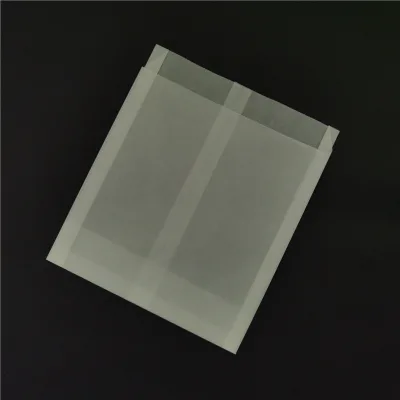
Source Food Packaging Glassine Paper Bag for Gift, Snack, Stationery
Find 30 verified options for food packaging glassine paper bag from suppliers in China. Compare specifications like GSM, size, and printing to select the right bag for gift, snack, or stationery applications.
Key considerations
Products List








Comprehensive Sourcing Guide
Strategic Sourcing Guide for Food Packaging Glassine Paper Bags
Understanding Material Properties and Technical Specifications
When sourcing food packaging glassine paper bags, the primary focus must be on the specific material characteristics that define performance. Glassine paper is distinct from standard coated paper due to its super-calendered finish, which provides a smooth, non-porous surface. Based on observed market data, buyers should verify that the material is explicitly identified as Glassine Paper rather than generic coated paper or plastic, as these offer different barrier properties. The observed specifications indicate a weight range where 30GSM, 35GSM, and 40GSM are popular choices. This gram-per-square-meter (GSM) measurement is critical for determining the bag's rigidity and suitability for specific food items. Lighter weights like 30GSM may be suitable for dry goods or wrapping, while 40GSM offers greater structural integrity for heavier snacks.
The surface finish is another vital technical parameter. The material is typically uncoated in its base form but can be treated to achieve specific properties. Observed data notes a "Glossy Matt Lamination" option for some paper products, though glassine inherently possesses a natural glossy sheen due to the calendering process. Buyers must confirm whether the product requires additional lamination or if the natural glassine finish suffices for the intended application. Furthermore, the transparency of the material is a key differentiator; glassine is generally non-transparent, which is essential for maintaining brand aesthetics and protecting light-sensitive food products. The sealing mechanism also varies, with options including self-sealing closures or spout tops. The choice between a folding paper bag style and a spout top design will dictate the filling process and the final presentation of the product.
Compliance, Certification, and Food Safety Standards
In the realm of food packaging, compliance is not merely a suggestion but a regulatory necessity. While specific certification data such as FSC status is noted as low-confidence in general market observations, buyers must treat this as a mandatory verification point rather than an assumption. Any supplier claiming to provide food-grade packaging must be able to demonstrate that their materials meet the specific food safety regulations of the target market, such as FDA regulations in the United States or EU Framework Regulation (EC) No 1935/2004. The material must be free from harmful substances that could migrate into food products.
Buyers should explicitly request documentation regarding the chemical composition of the glassine paper. Since the product is intended for industrial use in snack food, stationery, and gift packaging, the ink and adhesives used in the printing and sealing processes must also be food-safe. The observed data mentions "Eco-friendly" as a feature, which often implies biodegradable materials, but this term is not a substitute for specific food safety certifications. Suppliers should provide test reports confirming that the paper does not contain heavy metals, optical brighteners, or other contaminants prohibited in food contact materials. The "Standard and Customization Available" status suggests that while a baseline standard exists, the specific compliance requirements for a buyer's region may necessitate a custom specification. Therefore, the procurement process must include a rigorous audit of the supplier's quality management system to ensure consistent adherence to food safety protocols.
Cost Drivers and Pricing Variables
The pricing structure for glassine paper bags is influenced by several dynamic factors, primarily material costs, order volume, and customization requirements. The observed price range in the market is quite low, ranging from 0 to 0.36 USD per unit, but this figure should be treated as a baseline for standard, non-customized items in high volumes. The actual cost for a specific order will fluctuate based on the selected GSM. As noted, 30GSM, 35GSM, and 40GSM are popular weights; selecting a higher GSM will inevitably increase the material cost per unit. Additionally, the complexity of the printing process, specifically gravure printing, adds to the cost. Gravure printing is a high-quality method suitable for long runs but requires significant setup costs, which are amortized over the order quantity.
Customization is a major cost driver. The market data indicates that "Custom Order" and "Customized Logo" are accepted services. Implementing a custom logo, selecting specific colors like "White or Any Other Colors," or choosing a unique size such as 322612 cm versus 20X20X5 cm will impact the final price. The Minimum Order Quantity (MOQ) also plays a critical role in unit pricing. The observed MOQ range spans from 1 to 50,000 units. Orders at the lower end of this spectrum will carry a significantly higher per-unit cost due to setup and machine time inefficiencies. Conversely, orders approaching the upper limit of the MOQ range will benefit from economies of scale. Buyers must balance the need for customization and smaller batch sizes against the budget constraints, understanding that the "0-0.36" range likely represents the most efficient production scenarios.
Typical Applications and Functional Use Cases
Glassine paper bags serve a versatile range of applications, extending beyond simple containment to include branding and product protection. The primary industrial use identified is for snack food, where the grease-resistant and moisture-resistant properties of glassine are highly valued. These bags are ideal for packaging items like cookies, candies, nuts, and dry mixes that require protection from humidity and oil. However, the application scope is broader. The material is also suitable for stationery packaging, gift packaging, and clothing packaging. In the gift sector, the "Eco-friendly" and "Biodegradable Material" attributes make these bags attractive for sustainable branding, allowing retailers to align with environmental values while providing a premium unboxing experience.
The specific design features of the bag must align with the application. For food packaging, a self-sealing closure or a spout top might be preferred to ensure freshness and ease of use. For stationery or clothing, a folding paper bag with a glossy or matte finish may be more appropriate for aesthetic appeal. The observed single package sizes, such as 20X20X5 cm and 322612 cm, indicate that suppliers offer a variety of dimensions to accommodate different product volumes. Buyers should select a size that minimizes void space to reduce shipping costs and material waste. The "Non-waterproof" characteristic noted in some observations is a crucial limitation; while glassine offers some moisture resistance, it is not a substitute for fully waterproof plastic liners if the food item is highly susceptible to water damage. Therefore, the application must be carefully matched to the material's inherent properties.
Supplier Evaluation and Geographic Considerations
When evaluating potential suppliers for glassine paper bags, geographic origin is a significant factor. The observed data points to "Guangdong, China" and "Shandong, China" as primary places of origin. These regions are known for their robust manufacturing ecosystems and supply chain efficiency. Buyers should verify the specific factory location to assess logistics capabilities and potential shipping lead times. The "Delivery Time" is observed as 20 days after receiving the deposit, which serves as a benchmark for planning. However, this timeline can vary based on the complexity of the order and the supplier's current production load.
Supplier reliability is best assessed through their customization capabilities and communication transparency. The fact that "Custom Order" and "Customized Logo" are accepted suggests a flexible manufacturing environment. Buyers should request samples to verify the quality of the gravure printing and the consistency of the paper weight. It is essential to confirm that the supplier can consistently deliver the specified GSM and that the "White or Any Other Colors" options are achievable without compromising the material's integrity. Payment terms, such as "T/T" (Telegraphic Transfer), are standard, but buyers should negotiate terms that protect their interests, such as a deposit structure that aligns with production milestones. The "Single item" selling unit indicates that some suppliers may offer low-volume trials, which is beneficial for new buyers testing the market.
Quality Control and Long-Term Procurement Strategy
Implementing a robust quality control (QC) strategy is essential for maintaining product consistency. Given the "Standard and Customization Available" nature of the product, buyers must establish clear acceptance criteria before production begins. This includes verifying the single gross weight, which is observed at 0.500 kg for certain configurations, and ensuring the packaging method, such as "5-Ply Corrugated Carton" or "10000PCS Per Carton," meets the requirements for safe transit. The "Non-transparent" and "Non-waterproof" attributes must be validated through testing to ensure they meet the buyer's specific needs.
For long-term procurement, building a strategic partnership with a supplier who can scale production is advisable. The observed MOQ range up to 50,000 units suggests that suppliers have the capacity for large-scale orders. Buyers should aim to standardize their specifications over time to reduce costs and simplify the supply chain. Regular audits of the supplier's production line can help ensure that the "Eco-friendly" claims are substantiated and that the material remains free from contaminants. Additionally, maintaining open communication regarding market trends and material innovations can help buyers stay ahead of competitors. By focusing on verified specifications, clear compliance documentation, and a structured QC process, buyers can secure a reliable supply of high-quality glassine paper bags that meet their operational and branding goals.
FAQs
What materials are used for food packaging glassine paper bags?
The primary material is glassine paper, though some listings also show coated paper or plastic options. Buyers should verify the specific material type to ensure it meets food safety requirements, as glassine offers a smooth, non-porous surface suitable for snacks and dry goods.
Can I request a customized logo on these paper bags?
Yes, customized logos are accepted for these products. Suppliers typically offer gravure printing services to apply specific branding, allowing buyers to select from colors like white or brown while maintaining the bag's structural integrity and eco-friendly features.
What is the typical delivery time for these orders?
The standard delivery time is 20 days after receiving the deposit. This timeline applies to orders placed with suppliers in China, though actual lead times may vary depending on the complexity of customization and the current production capacity of the factory.
Which paper weights are popular for glassine food bags?
Popular weights include 30GSM, 35GSM, and 40GSM. The 40GSM option provides greater structural integrity for heavier snacks, while lighter weights like 30GSM are suitable for dry goods, allowing buyers to select the rigidity that best fits their specific product needs.
Are these bags waterproof for food packaging applications?
No, the observed specifications indicate these bags are non-waterproof. While glassine offers some moisture resistance, buyers must ensure the product is suitable for dry snacks or add protective liners if the food items are highly susceptible to water damage.
What is the minimum order quantity for these bags?
The minimum order quantity ranges from 1 to 50,000 units depending on the supplier. Lower MOQs allow for small batch testing, while larger orders benefit from economies of scale, with the price per unit generally decreasing as volume increases within this range.
Where are these glassine paper bags manufactured?
These bags are primarily manufactured in Guangdong and Shandong, China. Buyers should verify the specific factory location to assess logistics capabilities and shipping lead times, as these regions have robust manufacturing ecosystems for paper packaging products.